
Why can’t I switch my brain off at night? Understanding anxiety-driven insomnia
If your brain won't switch off at bedtime, you're not alone, and it's not about willpower. Here's what's really behind anxiety-driven insomnia, and how hypnotherapy can help you rest again.
4 minute read.

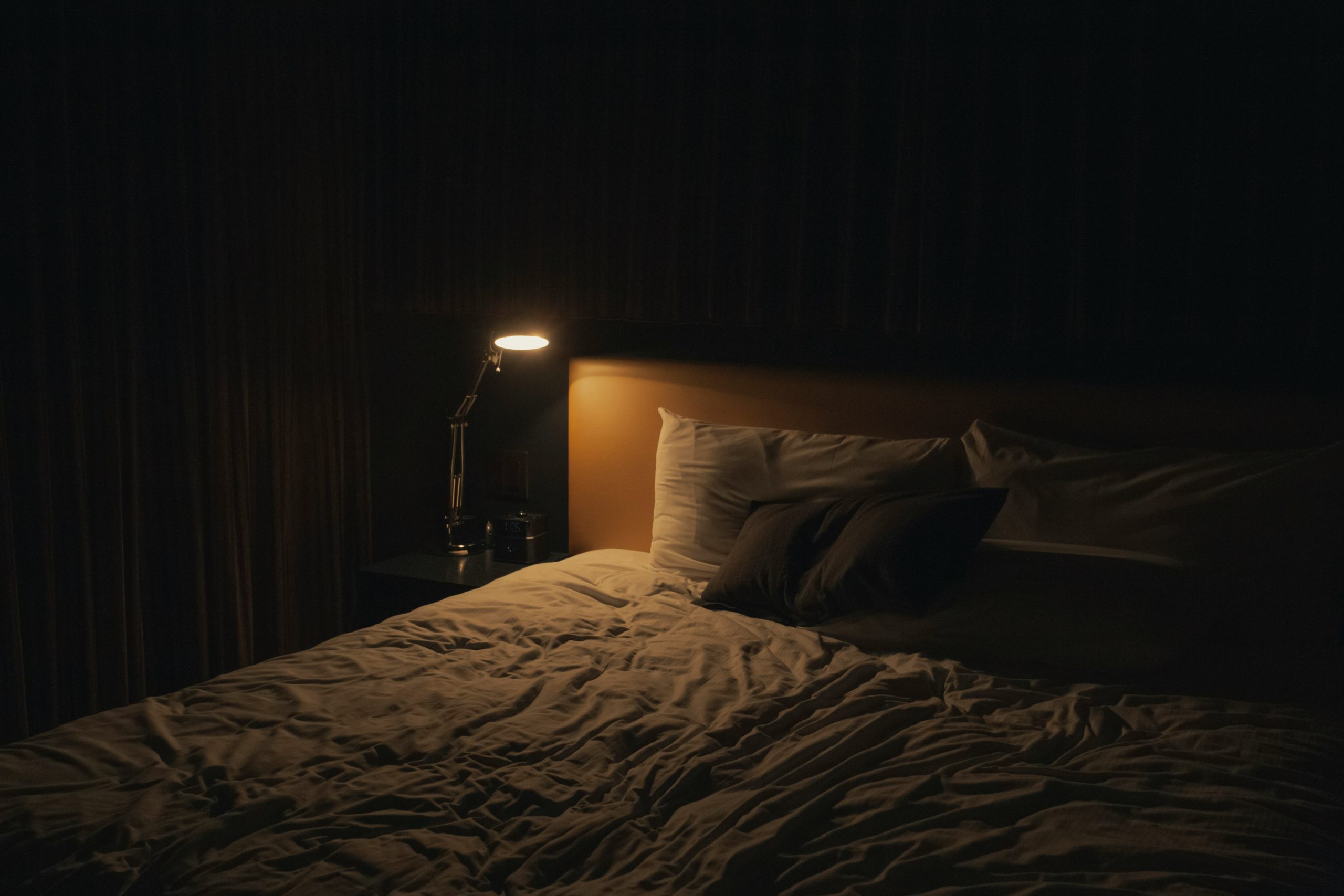
There’s a particular kind of tired that comes from lying awake at 2am with your mind going over tomorrow’s to-do list, that thing you said in a meeting three weeks ago, and whether you remembered to reply to that email. Your body is exhausted. Your brain won’t stop.
If this sounds familiar, you may be dealing with anxiety-driven insomnia. The good news is it’s your nervous system doing exactly what it’s designed to do. The bad news is it’s doing it at the wrong time.
What anxiety-driven insomnia looks like
It doesn’t look the same for everyone, and it can even look different for you from one night to the next.
Sometimes it’s an hour of lying there before your mind lets you drift off. Sometimes it’s falling asleep fine, then waking at 3am with your heart going and a list of worries ready and waiting. Sometimes you do sleep, but you wake up already tired, as if your body never fully switched off.
You might notice you’re tired all day but wired at night, or dread bedtime because you know what’s coming. Or you might not connect it to anxiety at all, you just think you’re “a bad sleeper” and have accepted it as part of who you are.
It isn’t. It’s a pattern, and patterns can shift.
Why anxiety keeps you awake
When you’re anxious, your body stays in a state of alert. Racing thoughts, tight shoulders and a fast heartbeat are signals your brain treats as “something needs attention right now”. Useful if you’re facing an actual threat, but of course much less useful when you’re trying to fall asleep.
The more nights this happens, the more your brain starts to link your bed with wakefulness rather than rest. You get in and expect to lie there with your brain switched on, thinking. Your body goes along with it.
It becomes a loop: anxiety disrupts sleep, poor sleep makes you more anxious, and then it goes back around.
“Just relax!”
You’ve probably tried to tell yourself to relax, or followed advice about screen time, herbal teas, room temperature, and probably lavender pillow spray.
If none of that’s made a difference, it’s because those tips address your insomnia symptoms, rather than what causes them. Anxiety-driven insomnia isn’t really about sleep hygiene. It’s about a nervous system that hasn’t learned how to switch off, especially once the day’s distractions are gone and there’s nothing left to compete with your thoughts.
As a hypnotherapist trained specifically in insomnia support and sleep consultancy, I work with clients to address both the anxiety and the sleep at once, rather than just handing out generic sleep tips.
How hypnotherapy can help
Hypnotherapy works well here because it reaches the part of the brain that keeps you on high alert, the part logic alone often can’t talk down. In sessions, we work on:
- Calming the racing thoughts that show up the moment your head hits the pillow
- Rebuilding a sense of safety and ease around bedtime, rather than dread
- Addressing the anxiety at its root, not just the sleeplessness it causes
- Giving you practical tools you can use yourself, between sessions and beyond
This isn’t about erasing stress from your life. It’s about helping your nervous system know the difference between genuine danger and a busy day, so it can actually let you rest.
When to think about getting support
A rough night here and there is normal. But when poor sleep has become the pattern rather than the exception, or when tiredness is starting to affect your mood, your patience, your work or your relationships, it’s worth paying attention to the anxiety underneath. You don’t need to wait until it feels unmanageable before reaching out.
You don’t have to just live with this
Poor sleep affects everything: your patience with your kids, your focus at work, your ability to cope with things that would normally feel manageable. If you’ve been telling yourself it’s just a phase, or that everyone’s tired, the truth is anxiety-driven insomnia is treatable .
If this sounds like where you are right now, I’d love to help. Book a free consultation and we can talk through what’s keeping you awake and how sleep support could work for you.

About the author
Andrea Szentgyorgyi is a therapist based in Manchester, specialising in anxiety, insomnia and sleep, with additional training in EMDR and emotional infertility support.
She offers both in-person and online sessions, helping clients get to the root of what’s keeping them stuck, whether that’s racing thoughts at bedtime, long-standing anxiety, or difficult life transitions.